Before this becomes another story told too late, the Ukrainian government, Kyiv’s local authorities, the State Property Fund and the State Migration Service should intervene to protect the artist community Nahirna22. After surviving two Russian strikes, and raising money to repair the very building they were asked to keep alive, these artists were ordered to leave the Kyiv Institute of Automation. This is not a minor property dispute. It is a test of whether Ukraine understands that culture is not decoration in wartime. It is national security.
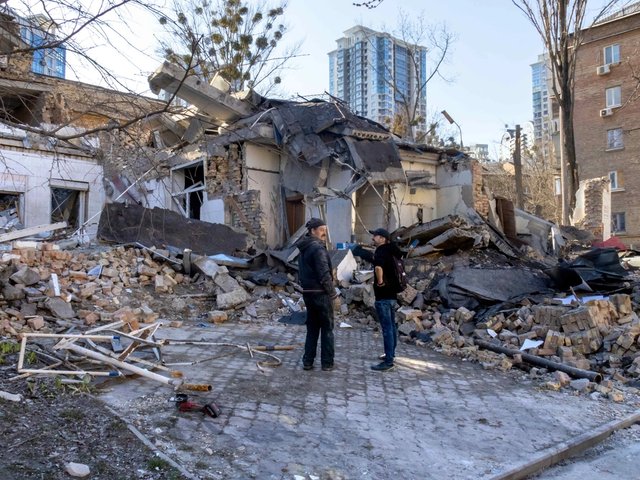
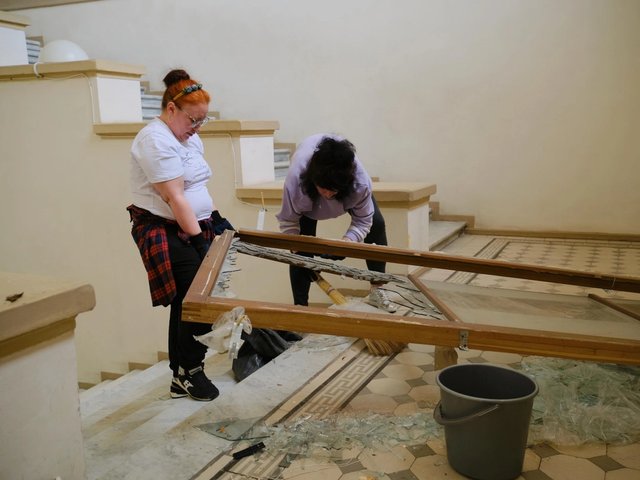
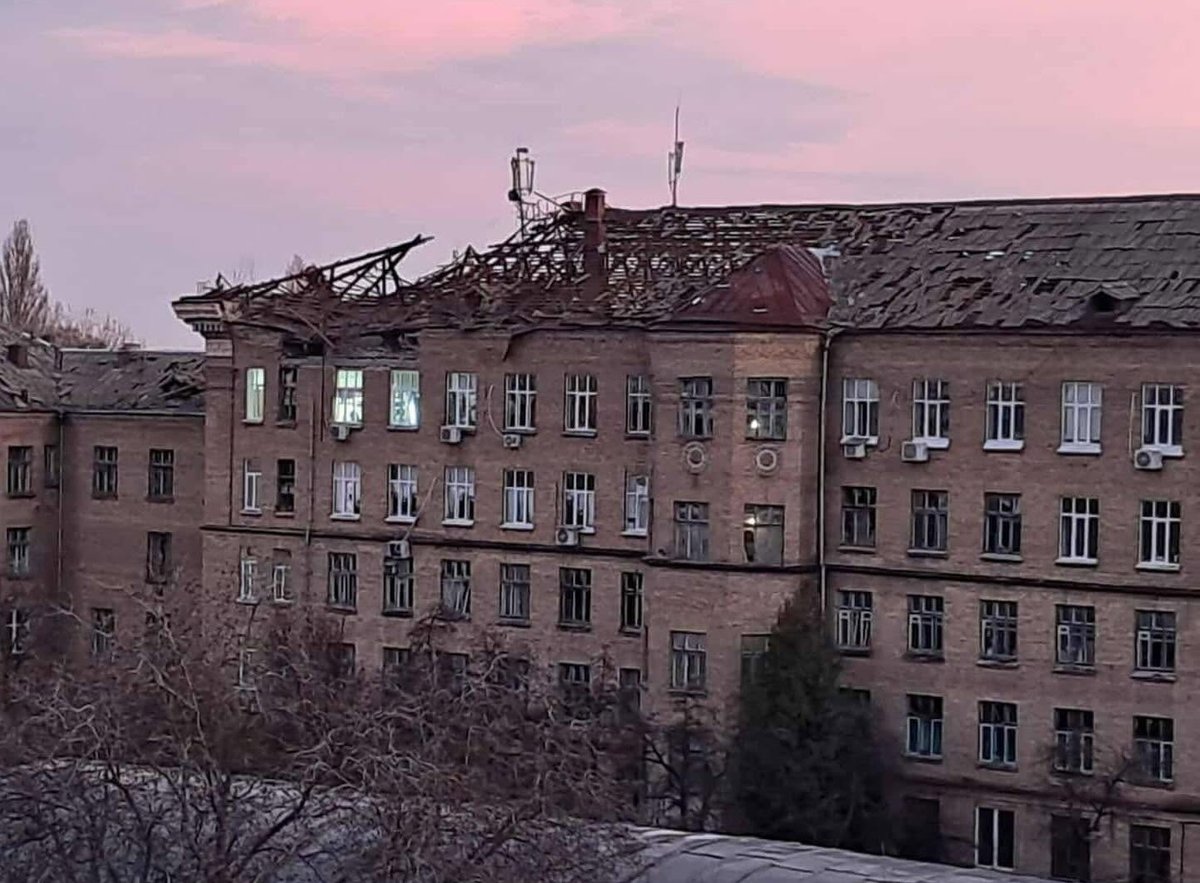
On 28 August 2025, the Russian military struck Kyiv and shattered the studios at Nahirna22. The windows exploded into the corridors. Canvases were torn, machines smashed. A civilian was killed. The young artists who work there swept the glass with their hands, patched the openings with improvised plastic sheets, salvaged what could be saved and reopened within weeks.
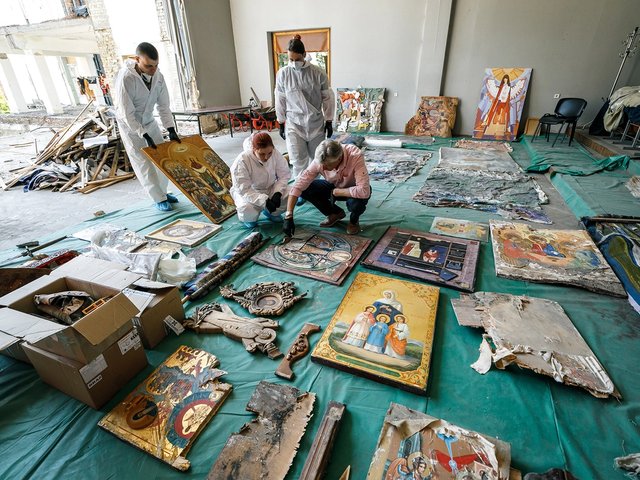
On 14 November 2025, Nahirna22 was hit again. Windows were destroyed again. The roof was damaged again. There is no military value in hitting a studio building full of young artists. The goal is simpler: break the culture, break the imagination and break the future.
Then, after the drones, a quieter threat arrived. On 30 April, the tenants were told to leave by the end of May. The community that raised hundreds of thousands of hryvnia to repair the building, after being given to understand that this would protect them from eviction, has been pushed out of the ecosystem it built and sustained. If Russia cannot erase Ukrainian culture from the air, Ukraine cannot let its own bureaucracy erase it from the inside.
This war is cultural. The Kremlin does not fear the Ukrainian language. It fears Ukrainians’ imagination. It fears the deep instinct for freedom, dignity and human potential that lives in this society. It fears that if people in Kyiv or Kharkiv are capable of it, one day the numbed people of Moscow may, too. Many of the most committed Ukrainian patriots still speak Russian at home. The dividing line is their worldview.
Not equal partners
Any peace plan that pretends to treat Russian and Ukrainian culture as two equal partners in a friendly exchange is worse than naïve. In the US draft plan, there is a point that calls for educational programmes to promote tolerance of different cultures and to guarantee linguistic rights on both sides. On paper it sounds noble, but it is a trap. Russia does not seek cultural coexistence. Russia seeks cultural absorption. It steals children. It burns books. It destroys museums. It claims Ukrainian artists as Russian. It bombs studios. It wants Ukrainians to wake up one morning and believe that being Ukrainian was only a fever dream and that they were Russian all along. There can be no cultural exchange between a free people and a power that is trying to erase them.
Anna Maydanik, who had a gallery inside Nahirna22, reminded me of a line from Petro Ivanyshy’s monograph, Petro Skunts: “I am left alone. Ukraine is something accidental.” Kyiv understands that line. It is home to the last living avant-garde in the Western world. It is a place where everyone is profoundly different, and yet there is a natural understanding of how to share a space. The shared instinct is humanism, the belief that the individual matters and imagination is a form of freedom. This is why the cultural capitals of Lviv, Kyiv and Kharkiv pose a threat to Moscow. Humanism contradicts authoritarianism by its very existence.
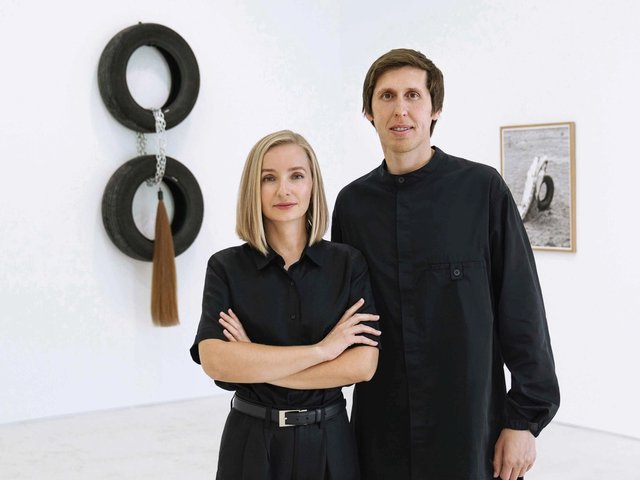
Maydanik said that Kyiv is what Berlin once promised for artists with nerve and talent. Individualism there does not lead to loneliness because it is met with solidarity. Nahirna22 was born from that impulse. A community created itself without permission. On 18 October 2025, the collective marked six years with an open studio event that raised money to replace the windows blown out in August. Sabina Magnitofon and Marta Nyrkova, two of the co-founders, raised 800,000 hryvnia from supporters abroad, galleries, Art Shield, open studio visitors and people who understood that a studio window in Kyiv is not only a studio window, it is a line of defence.
The strikes on Nahirna22 were attacks on the memory of a nation. The answer is to make that memory indestructible. That means protecting the artists now, giving them legal security and space. Let them stay or help them move together, but do not scatter them. Do not make them start again alone. Moscow tried to silence them with drones. Kyiv must not let them disappear through paperwork.
• Edward Akrout is an artist and actor